
How Georgia Jail Mugshots Work
A booking photo is tied to the jail or agency that processed the arrest. Georgia county sheriff rosters vary: some show a public image on the roster profile, some require a name search first, some use third-party jail software, and some make records available by request rather than through a full public roster. The statewide research does not support treating one county's roster format as the rule for all Georgia counties.
The direct GDC Offender Query form is the source that warns GDC offender photographs display automatically when available.
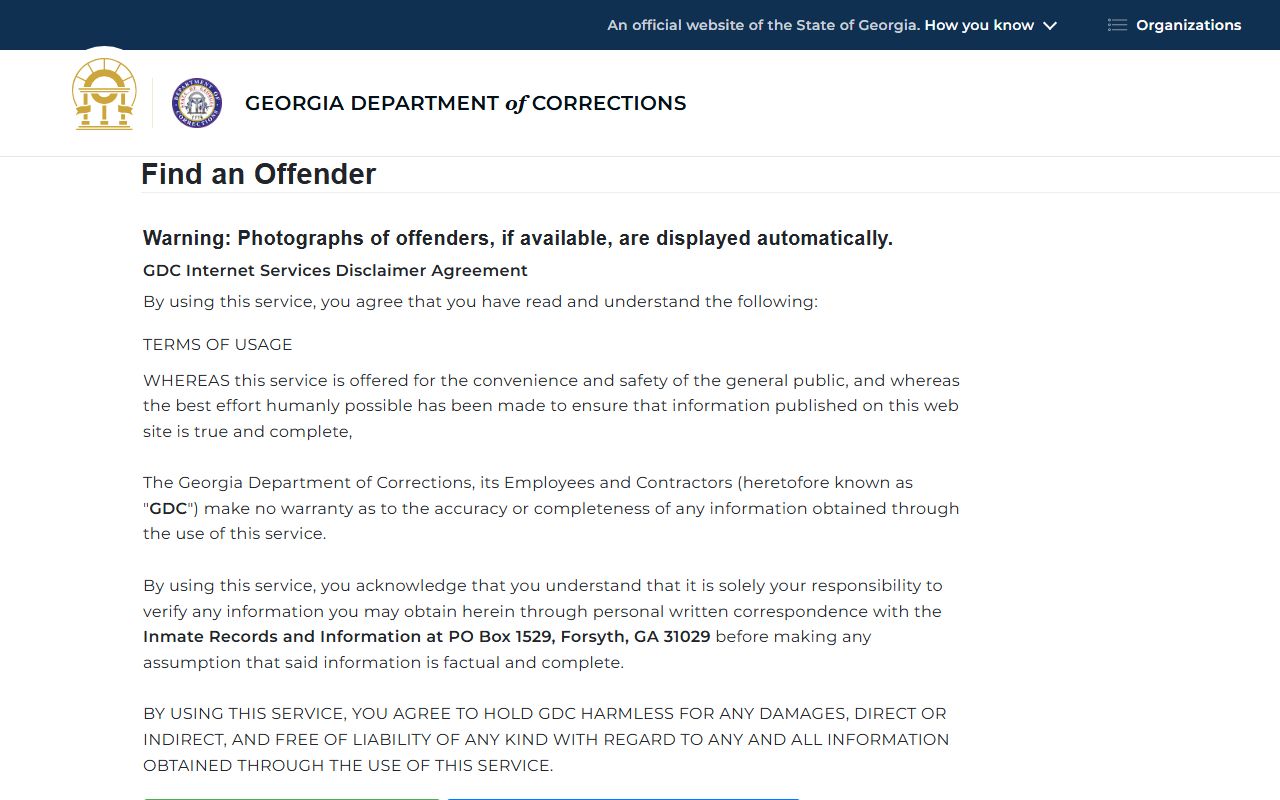
That image is included here because it shows the state-corrections photo context, which is different from county jail booking-photo practice.
GDC's direct offender-query disclaimer warns that offender photographs, if available, are displayed automatically. That warning belongs to the GDC state-corrections query and should not be confused with every county jail's booking-photo practice.
A Georgia jail mugshot should be read as a booking record, not as proof of guilt or final case status. The photo documents that a person was processed by a custody agency for a particular event. The court record after the arrest is the source for filed charges and dispositions. A county roster may show a photo while a case is pending, after release, or for only a limited window, depending on local policy and software.
Where to Find Georgia Booking Photos
For state custody, GDC's Find an Offender page is the official public entry point before the direct query.
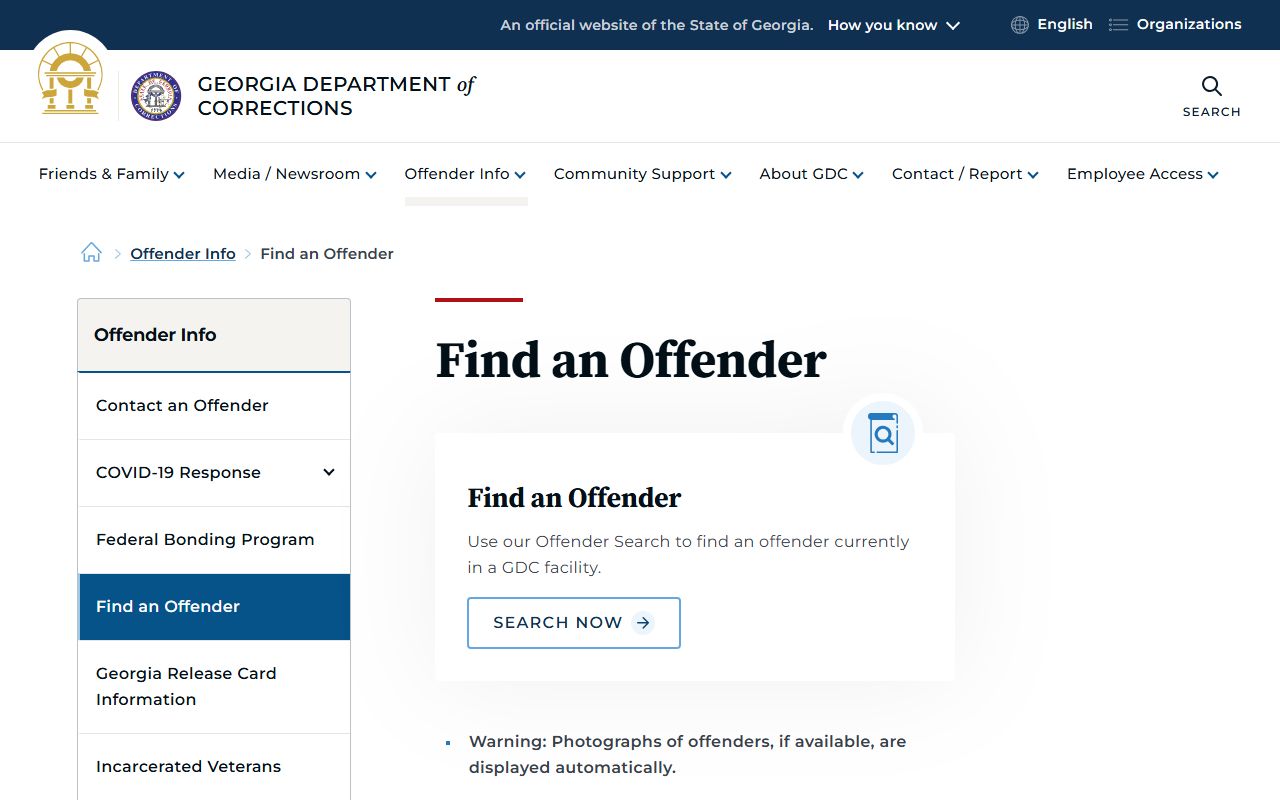
The state offender search is relevant when the person is in GDC custody; local booking photos still begin with the county that processed the arrest.
The county path is usually best for fresh bookings because the county created the booking event. The GDC path is best after state correctional custody begins or when a prior GDC offender record is the target. Federal BOP and ICE searches do not operate as Georgia county mugshot searches. VINE may help with custody alerts, but it is not a statewide booking-photo gallery.
- Identify the county that booked or currently holds the person.
- Open that county's inmate-population site from the County Directory.
- Use the sheriff jail roster, jail search, or official request path described for that county.
- If the person is in GDC custody instead of county custody, use the GDC Offender Query.
- Use BOP or ICE locators when custody is federal or immigration detention.
What a Georgia Booking Photo Shows
A jail booking photo normally identifies the person as booked into a specific custody event. It should not be read as proof of conviction. Jail profiles may also show name, booking number, charge, bond, arrest date, release date, facility, or court information, but those fields vary by county. Court records after the arrest are a separate case-record source, and GDC offender records are a separate state-corrections source.
Use the record label and date together. A photo tied to one booking can remain separate from later charges, transfers, state custody, or court outcomes.
| Roster Field | How to Read It |
|---|---|
| Photo or image | Booking or offender photograph when the agency displays one. |
| Booking number | Local identifier for the jail event, not always a court case number. |
| Charge | Booking label or filed charge depending on the agency and timing. |
| Bond or release status | Custody information that can change after a hearing or order. |
| Facility | The jail, prison, center, or agency tied to the record. |
Are Georgia Jail Mugshots Public Record?
Georgia's Open Records Act is the statewide public-records framework, but the custodian matters. A county jail booking photo request generally goes to the sheriff or county records custodian. GDC prison records go through GDC open records and are subject to GDC's listed exceptions. The research notes exceptions for sensitive correctional material, security classifications, investigations, personal employee information, safety-sensitive policies, and medical or mental-health records without proper consent.
The GDC open-records request page is the captured source for state prison records and GDC exceptions.
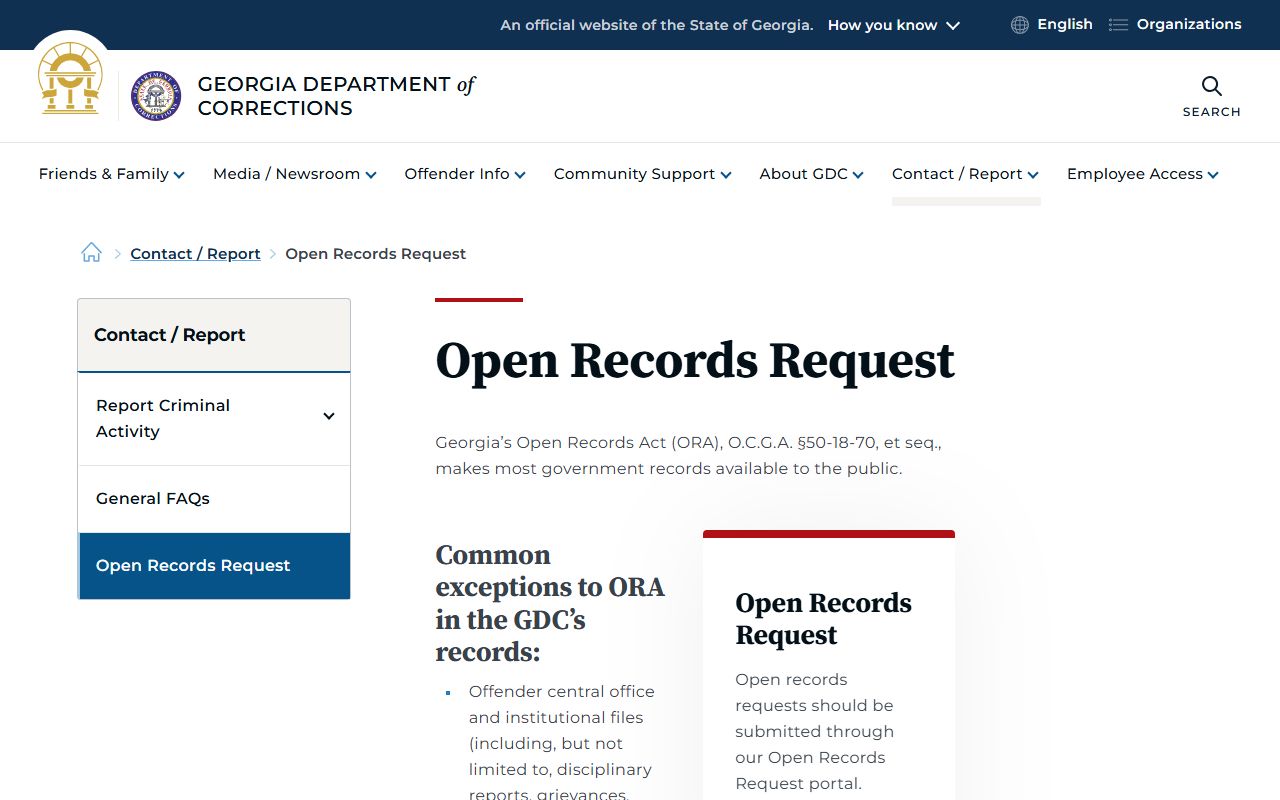
That source supports the records-custodian distinction: a county booking photo request is local, while a GDC offender-record request follows GDC rules.
Public access does not mean every image is online, permanent, or available without limits. A county may publish a photo on a public roster, provide it through an open-records process, withhold sensitive material, or remove a profile from the public roster after a status change. GDC has its own exceptions and verification warning. Federal and immigration agencies have separate record rules.
Use the correct custodian: county booking photo requests go to the county; GDC records go to GDC; federal and immigration records do not go through Georgia county jail offices.
How Long a Mugshot Stays on the Roster
Roster timing is county-specific. A booking photo can disappear or stop appearing publicly when a person is released, transferred, moved to another facility, when a roster refreshes, or when the county's software limits historical records. A missing image does not prove that a case was dismissed, sealed, restricted, or expunged; it may only mean the public roster changed.
For historical questions, ask for the record type rather than only the photo. A booking packet, jail log entry, arrest report, court docket, or GDC offender record may answer a different part of the question. If the person was transferred to state custody, the GDC locator and GDC open-records process become more useful than the old jail roster. If the question is case outcome, use the court record after the arrest.
Mugshot Removal and Restricted Records
Questions about removing or restricting arrest records should be handled through the official court, prosecutor, clerk, or records-restriction process, not through commercial mugshot-removal claims. Georgia court access is provider-fragmented, so use Georgia Courts e-access to identify the court provider, then use re:SearchGA, PeachCourt, the county clerk, or the local court route where the case is filed. See court records after an arrest for the case-record side.
The Georgia Courts e-access page is the statewide provider-routing source for court-record searches.
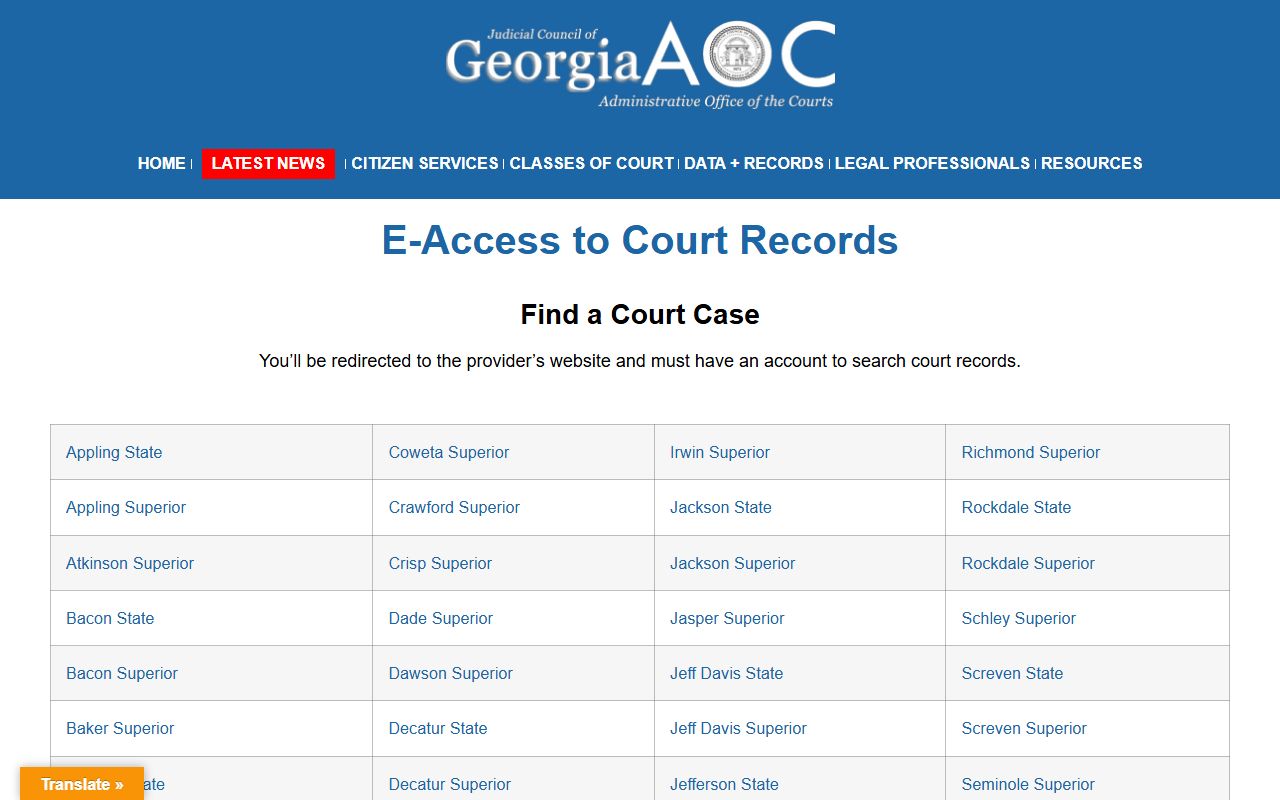
It is included here because removal or restriction questions eventually turn on court and official records processes, not on a statewide mugshot-only portal.
Do not treat a commercial removal offer as an official records outcome. The official question is whether the responsible agency, court, or records custodian must restrict, seal, amend, or remove access under the governing process. A private website may copy or display material differently, but the source record remains with the sheriff, jail, court, GDC, BOP, or ICE.
Federal and State Prison Booking Photos
State prison photos are handled through GDC offender records and GDC open-records rules. Federal prison status is searched through BOP, which is separate from Georgia county jails. ICE detention is searched through ICE ODLS. A county booking photo is not the same record as a GDC offender photograph, a BOP locator entry, or an ICE detainee record.
That difference is especially important for Georgia facilities such as FCI Atlanta, FCI Jesup, Stewart Detention Center, Folkston ICE Processing Center, and the many GDC state prisons and transitional centers. They may be physically located in Georgia, but their photo and inmate-record rules do not follow a county jail roster pattern. Use the facility type first, then choose the locator or records custodian that matches it.
When the person has moved through more than one system, compare dates. A county booking photo may relate to the arrest date, while a GDC profile may relate to later state custody. A BOP or ICE locator may show a separate federal or immigration custody event. Date context keeps one photo from being mistaken for the whole case history.
Public Record Search
Sponsored Results