
Georgia Court Records After Jail Arrest
An arrest can create a jail booking record before the court case is fully visible. Court records begin when charges, warrants, accusations, indictments, bond orders, pleadings, hearings, or dispositions are filed in the court system. The jail roster may show a charge label or bond status, but it does not replace the court docket. Use inmate records for custody and jail rosters and mugshots for booking-photo questions.
The arrest-to-court path often moves in stages. A person is booked into a county jail, appears before a judicial officer, may receive or contest bond, and then waits for the prosecutor or grand jury process to shape the formal charge. The court record after jail arrest is the place to confirm filed charges, hearing activity, case number, court assignment, disposition, and later record actions. The booking entry is useful, but it can lag behind or differ from the docket.
Georgia Court Records After Arrest Systems
Georgia court access is organized by court and county, with provider differences. The Georgia Courts e-access page is a statewide gateway that redirects users to provider websites and notes that an account is required to search court records. re:SearchGA allows registered users to search case information and court documents across multiple Georgia counties. PeachCourt is a statewide eFiling and court-document platform used by many Georgia courts. Local superior, state, magistrate, probate, juvenile, and municipal courts can still have separate clerk or provider routes.
The Georgia Courts e-access page is the captured statewide gateway for provider routing.
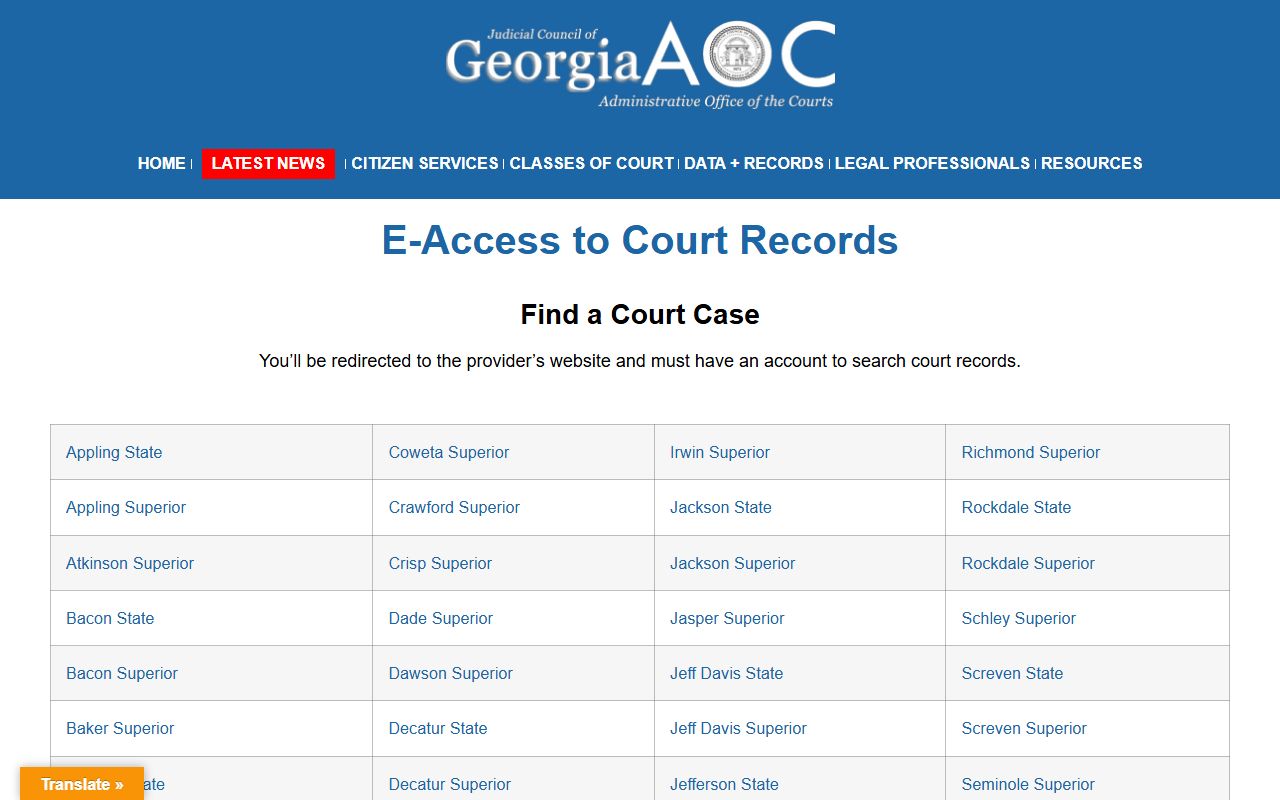
This screenshot belongs on the court-records page because it shows why a court search often starts by identifying the participating county and provider.
Provider fragmentation is the main statewide caveat. One county may route searchable case records through re:SearchGA. Another may route filings through PeachCourt or a clerk-managed portal. Some records require a clerk request even when basic docket entries are visible online. The correct court record after arrest depends on where the case was filed, which court has jurisdiction, and which provider serves that court.
How to Find Georgia Court Records After an Arrest
When custody status is still changing, Georgia VINE/VINELink can supplement court monitoring with custody-status notifications.

VINE helps with custody alerts, while the court docket remains the source for charges, hearings, filings, and dispositions.
Search by name only when the case number is unknown. If a booking record gives a charge, court date, warrant number, or case number, use those details to narrow the search. Confirm the county and court before relying on a result, because common names and multi-county cases can create false matches. A jail release does not close the court case, and a court case can continue after the person leaves jail.
- Identify the county where the arrest, charge, or case was filed.
- Use Georgia Courts e-access to identify the participating provider when available.
- Search re:SearchGA, PeachCourt, or the local clerk portal when that court uses it.
- Search by defendant name or case number, then confirm court, county, charge, date, and status.
- Use the County Directory when the first problem is finding the correct county jail or local page.
How Charges Get Filed After an Arrest
After arrest, a person may have jail booking charges before the prosecution has filed the final court charge. Court records can later show an accusation, information, indictment, amended charge, dismissal, plea, trial result, sentence, or other disposition depending on the court and case type. A jail charge label is therefore a starting point, not the final legal record.
The charging document matters because it tells the reader what the state is actually pursuing in court. A complaint may start the case or support a warrant. An accusation or information can be used for certain prosecutions. An indictment reflects grand-jury action. The labels and timing vary by court and case type, but the main rule is steady: use the court record to verify the official filed charge after a jail arrest.
| Document | What It Can Show | Why It Matters |
|---|---|---|
| Complaint or warrant filing | Early allegations, probable-cause basis, or arrest-related filing | Often appears near the start of the arrest-to-court path |
| Accusation or information | Formal prosecutor-filed charge where used | May differ from the booking label |
| Indictment | Grand-jury charge in eligible cases | Can define the felony charge that moves forward |
Bond and Release After an Arrest
Bond and release information can appear in both custody and court systems, but each system answers a different question. The jail roster may show whether the person is currently held or released. Court records may show the bond order, conditions, hearing dates, or changes ordered by a judge. Verify urgent release, bond, visitation, and transport details with the jail or court that controls the current record.
If the arrest results in state correctional custody, the GDC Offender Query becomes a relevant custody source after the county and court stages.
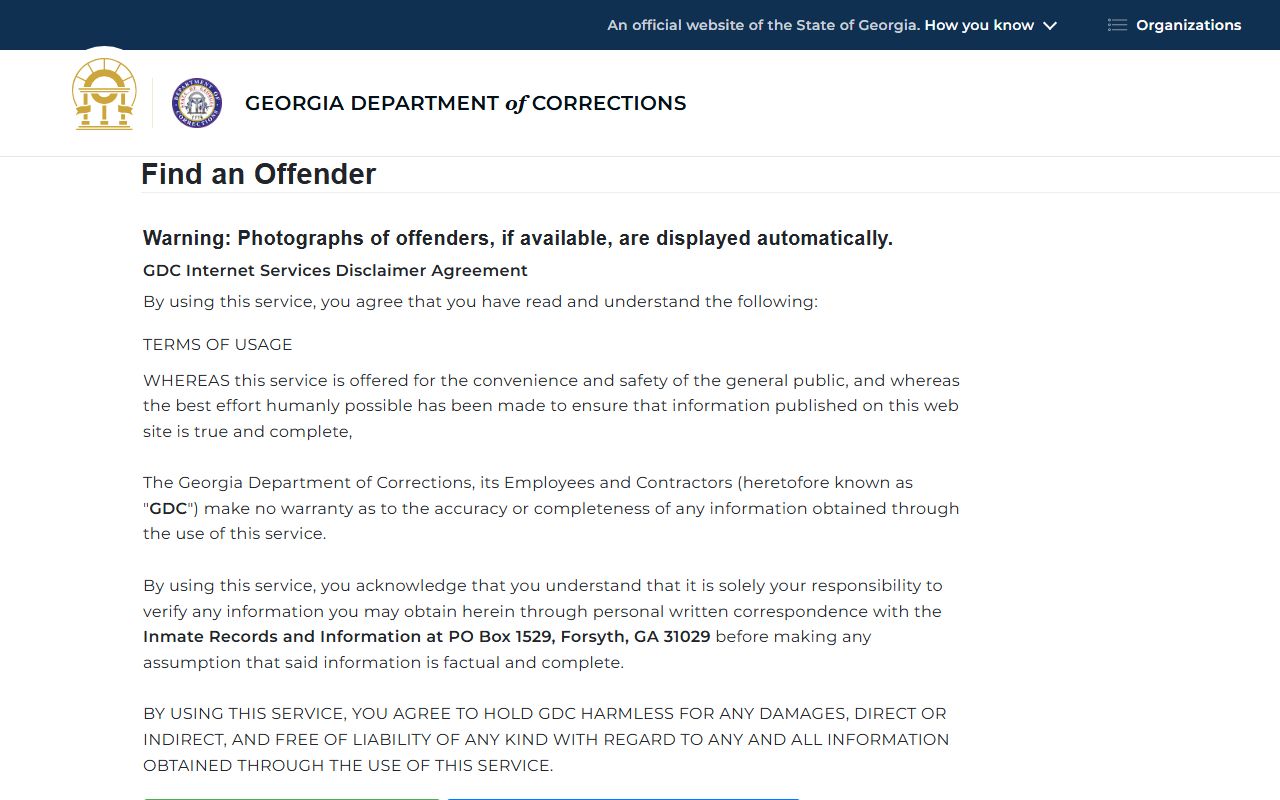
The image underscores the transition point: county jail and court records handle the arrest case, while GDC handles state correctional records after state custody begins.
A release from jail also does not mean charges vanished. Release may follow bond, dismissal, transfer, sentence credit, time served, agency pickup, or another order. The court docket is the source for whether charges remain pending, were dismissed, were amended, resulted in a plea, or ended in conviction. The jail roster answers custody status; the court record after arrest answers case status.
Sealed, Restricted, and Expunged Arrest Records in Georgia
Do not assume that a missing jail roster entry means a case was sealed, restricted, or expunged. Roster visibility changes for many operational reasons. Records-restriction questions should be handled through the appropriate court, prosecutor, clerk, or official legal process. The statewide research supports a routing explanation rather than a one-size-fits-all claim, because Georgia court provider coverage is fragmented by county and court.
A court record after a jail arrest can also be partly visible. A public docket may show basic events while a document image, juvenile matter, sealed order, or restricted record is unavailable online. Ask the clerk or court provider about access rules before treating an online search result as complete.
| Status | Practical Meaning | Where to Verify |
|---|---|---|
| Charge | An allegation or filed count in the case record | Court docket and charging document |
| Conviction | A finding or plea that resulted in judgment | Court disposition and sentence entries |
| Restricted or sealed record | A record limited by court order, statute, or official process | Clerk, prosecutor, court order, or official record-restriction route |
Restricted Court Records After an Arrest
Some court materials may be unavailable online, restricted by law or court order, or accessible only through the clerk. For public records outside the court docket, Georgia's Open Records Act may apply to agency records, but an agency does not have to create a new report or compilation if no record exists. Use the court or clerk for case documents and the jail, sheriff, GDC, BOP, or ICE for custody records.
For state correctional records outside the court docket, the GDC open-records request page is the captured source for GDC records routing.
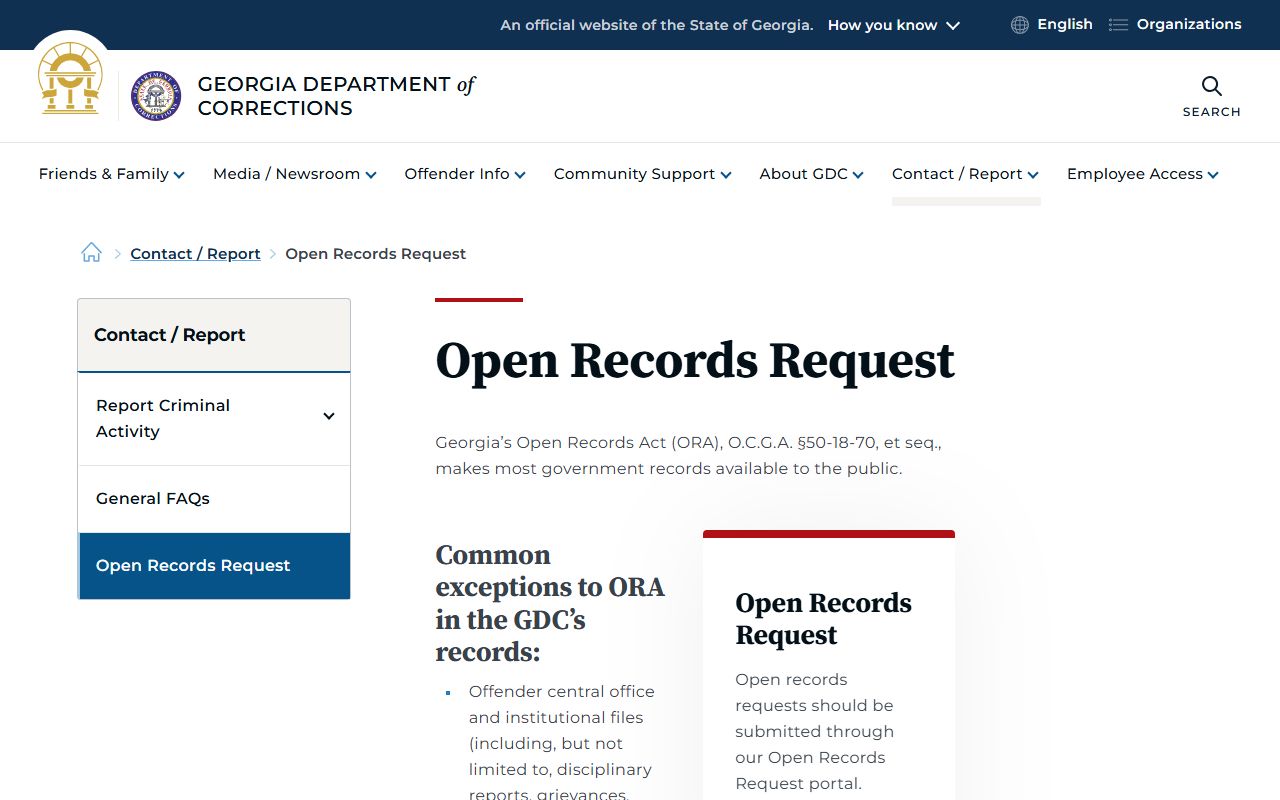
That GDC records page is relevant here only after the question leaves the court file and becomes a correctional-record request.
For a complete arrest-to-case check, compare at least three sources when they exist: the county jail record for custody, the court record for filed case activity, and the relevant state or federal locator if the person was transferred. Each source can update at a different time. A booking record can be removed from a public roster while the case remains active. A docket can show a hearing while the person is no longer in jail. A GDC profile can appear after a sentence or revocation changes custody.
Public Record Search
Sponsored Results